Environmental engineering

Warsaw University of Technology
Faculty of Environmental Engineering
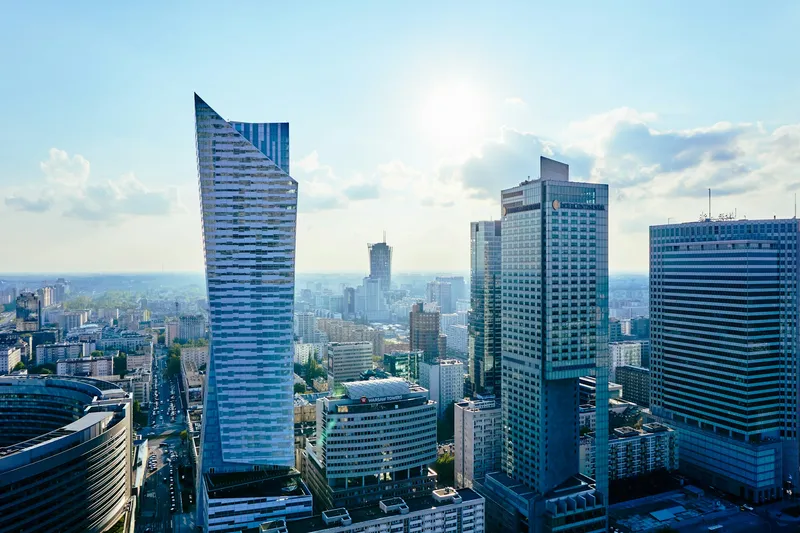
Warsaw, Poland
Duration
8 semesters
Tuition Fee
non-EU: EUR 3 000 / semester / EU: PLN 3 500 / semester
ECTS Credits
240
Degree
B.Sc.
Key Details
Programme Description
The major objective of the Environment Engineering Programmes is to provide high quality, interdisciplinary knowledge and skills to people searching for solutions to the environmental problems of today and the future, concerning: water resources protection, air pollution control, solid waste management, environmental impact assessment, renewable energy systems and others.
At the undergraduate level of Environmental Engineering, principal engineering skills are taught together with the achievement of knowledge of basic subjects such as mathematics, physics, chemistry and biology. All the students of the Faculty are given general knowledge of processes in major constituents of environment as well as in basic environmental technologies, e.g.: atmospheric physics and chemistry, air pollution control, hydrology, water resources and water protection, water and sewage processing, groundwater, soil protection and land reclamation, waste management. Modern methods of natural resources protection through the use of best available technologies and production practices, recycling and reuse of wastes are thoroughly taught. In addition, environmental aspects of the energy production and use are stressed throughout all engineering courses. Students are also familiar with some global environmental issues such as climatic change, ozone layer depletion, land use changes and global water scarcity and contamination. The first three semesters of the programme provide students with basic knowledge of mathematics, physics, chemistry and biology at the university level. In addition, several engineering basic courses are offered to give students a comprehensive understanding of environmental issues. The next four semesters cover specific topics within the field of environmental engineering. The eighth semester is devoted mostly to the professional internship, working on the final project and preparation of the B.Sc. thesis, in which students use their knowledge to analyse and find a proper solution to a given problem.
Examples of modules:
• Biology and Ecology • Information Technology • Strength of Materials and Structural Mechanics • Material Engineering • Fluid Mechanics • Civil Engineering and Constructions • Statistics in Environmental Sciences • Hydrology • Meteorology • Soil Protection • Engineering Hydrology and Hydrogeology • Environmental Chemistry • Air Pollution Control • Solid Waste Management • Water Resources Protection • Municipal and Industrial Wastewater Treatment • Renewable Energy Systems
Career opportunities:
The undergraduate programme in Environmental Engineering aims at a general engineering practice related to the protection of the environment and sustainable development. Students are trained for positions as consulting engineers, environmental affairs engineers for industrial and transportation companies, land reclamation and waste management companies, water and sewer companies, engineering design studios and consulting companies, civil servants in national, regional and local environmental agencies and services, environmental inspection and monitoring units.
Admission Requirements
Admission requirements are available here https://www.students.pw.edu.pl/index.php/How-to-Apply/Admission-to-B.Sc
Need Help Applying?
Our experts guide you through every step - from choosing the right programme to obtaining your visa.
500+ students helped successfully
University Information
University
Warsaw University of Technology
Type
University of Technology
Faculty / Unit
Faculty of Environmental Engineering
Region
Mazowieckie
City
Warsaw
Budgeting for Your Studies?
Don't just guess your expenses. Use our interactive calculator to get a precise, personalized monthly cost estimate based on your lifestyle, housing preferences, and city.
Calculate My CostsProgramme information is provided by universities and may change. Always verify details during your consultation.